What are the dangers of the lasers in light shows?
Laser shows are stunning, but are they safe? You might worry about the bright beams. We will explain the real dangers and how professionals like us ensure everyone's safety.
The biggest danger from show lasers is permanent eye damage1. A direct hit from a powerful, focused beam2 can burn the retina in an instant, causing partial or total blindness. This is why professional operation and audience scanning3g avoidance](https://www.ilda.com/audiencescanningsafety.htm)%%%FOOTNOTE_REF_4%%% are absolutely critical for any safe laser display.
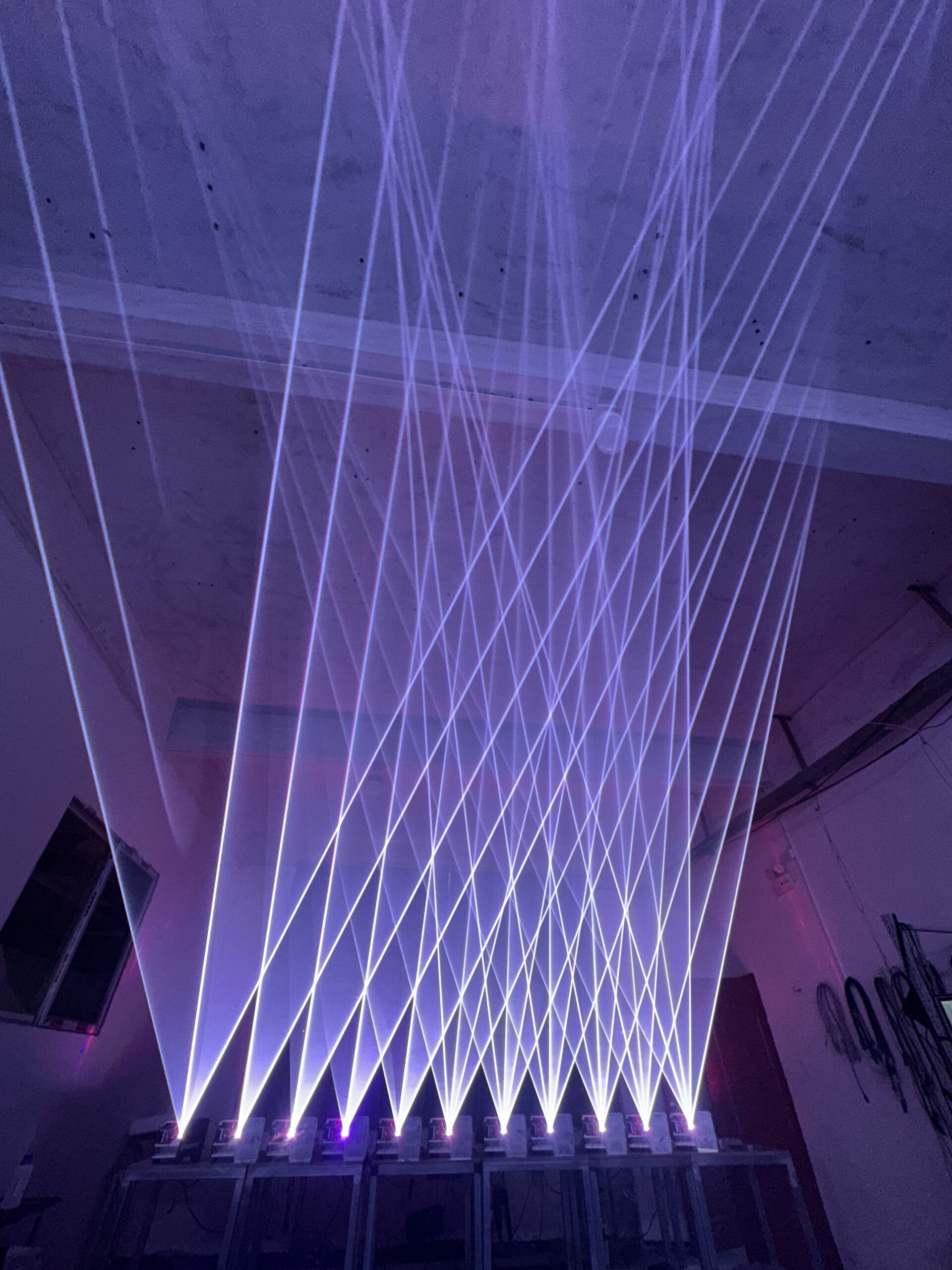
I've been in this business for 18 years with Goldenstar Laser5, and I've seen it all. The magic of a perfectly executed show is incredible. But I've also seen the consequences of cutting corners. It's crucial to understand not just that lasers can be dangerous, but why they are and how we manage that risk. Let's break it down so you can enjoy the next show with confidence.
Why is a laser beam so much more dangerous than a regular light bulb?
You look at bright lights all the time without harm. So what makes a tiny laser dot so different? It's confusing. Here’s the simple science behind the danger.
Unlike a bulb, laser light is focused into a tight, parallel beam. This concentrates all its energy onto a tiny spot on your retina, instantly burning it like a magnifying glass. Regular light spreads out, so its energy is safely dispersed before reaching your eye.
A regular 100-watt light bulb seems bright, but its light spreads out in every direction. By the time it reaches your eye, the energy is very diluted. A laser is different. It's "collimated6," meaning all the light rays travel parallel to each other in a tight beam. Think of it like the difference between a water sprinkler and a pressure washer7. The sprinkler gets everything wet, but the pressure washer7 can cut through dirt.
The Power of Concentration(
The lens in your eye makes this even more dangerous. It takes that already concentrated laser beam and focuses it down to an even smaller point on your retina. This can increase the energy density by up to 100,000 times. This intense concentration of energy is what causes an instant thermal burn8 on the retinal tissue. It literally cooks the cells, causing permanent damage.
Laser vs. Regular Light
Let's compare them directly to make it clear:
| Feature | Laser Light | Regular Light (Bulb) |
|---|---|---|
| Beam | Collimated (Parallel rays) | Diffuse (Spreads out) |
| Colors | Monochromatic (One color) | Polychromatic (Many colors) |
| Energy | Highly Concentrated | Widely Dispersed |
| Eye Impact | Focuses to a tiny, high-energy spot | Spreads across the retina |
This is why a one-watt laser is thousands of times more hazardous than a 100-watt light bulb.
How do professionals create safe laser shows?
You see lasers scanning over the crowd and wonder how it's safe. It looks risky. We use specific techniques and technology to protect you, turning potential danger into safe spectacle.
Professionals ensure safety by keeping high-power beams out of the audience area. This is called "zoning9." They create a "termination point10" on a wall or screen, or keep beams well above head height. Any effects that seem to touch the crowd are carefully controlled.
At Goldenstar Laser5, safety is our first thought. We don't just point and shoot. The number one rule is to control where the powerful laser energy goes. This involves careful planning before the show even starts. As a company with our own R&D department, we build safety into our product design from the ground up.
The Golden Rule: Zoning
We divide the venue into zones. The "laser zone" is where the beams will be. The "audience zone" is where they must not be. We program our systems to keep all high-power beams completely above the audience. Usually, this is at least 3 meters (about 10 feet) above the floor. We also use physical "stops" or "termination point10s" like walls, screens, or the ceiling. The beam's journey is planned from the laser to its final, safe destination.
Technology's Role in Safety
Modern software is key. As official distributors for Pangolin11, the industry standard, we rely on its advanced safety features. This software allows us to draw out the audience area on a 3D model of the venue. We can then command the system to never project into that space. It also helps us calculate the beam's power and speed to ensure it stays below the Maximum Permissible Exposure (MPE)12, the internationally agreed-upon safe level for eye exposure.
What about lasers that seem to scan over the crowd?
Sometimes you see effects that look like they're right in the audience. This can be alarming. Are the rules being broken? There's a special technique for this that's perfectly safe.
This effect, called "audience scanning3," is only done with lasers that have been specifically measured and tested to be safe for direct eye contact. The power is reduced, and the beam moves very fast, so the energy delivered to any one spot is below the safe exposure limit.
Seeing a liquid sky effect wash over your head is an amazing feeling. But it naturally brings up questions about safety. How can this be done? It's a very advanced technique that requires deep knowledge and specialized equipment. It is not something to be attempted by amateurs.
It's All About Speed and Power
The key is managing the energy dose. A stationary beam is dangerous. But if you make that beam move incredibly fast, the "dwell time" on any single point (like your eye) becomes extremely short. By combining very fast scanning with a carefully controlled, lower laser power, we can ensure the total energy your eye could possibly receive is far below the Maximum Permissible Exposure (MPE)12. It's the difference between holding your hand over a candle flame and quickly passing it through.
The Importance of Measurement
You can't just guess. As professionals, we use special tools called laser power meters13 and radiometers to measure the output. We perform tests before every show to certify that the effect is safe and meets all legal requirements. Never trust a laser show operator who performs audience scanning3 without demonstrating they have done these measurements. It is a sign of a true professional.
Can lasers damage my phone or camera?
You want that perfect photo of the laser show. But you've heard it can fry your camera's sensor. Is it worth the risk? Let's explain how to get the shot safely.
Yes, a direct hit from a static or slow-moving laser beam can permanently damage a camera sensor14. It works just like it does on a human eye, concentrating energy and burning the pixels. The risk is highest when you are in the direct path of the beam.
In my 18 years, I've seen many amazing photos of our shows. But I've also heard sad stories of damaged cameras. The risk is very real, and it works for the same reason a laser can harm an eye. It's a common issue at concerts and festivals.
Your Camera's Digital Retina
Your camera's sensor is a grid of millions of tiny light-sensitive components, like a digital retina15. The lens in your camera focuses light onto this sensor, just like your eye's lens focuses light onto your retina. A direct laser beam, focused by your camera lens, can overload and burn out a group of pixels. This will leave a permanent dead spot or a colored line on all your future photos. It happens in a fraction of a second.
How to Photograph Lasers Safely
You can still get great shots. You just need to be smart about it.
| DO | DON'T |
|---|---|
| Shoot from an angle, off to the side. | Shoot directly into the laser projectors. |
| Capture the beams in the smoky air. | Point your camera down the "barrel" of a beam. |
| Use a wide-angle lens to capture the whole scene. | Zoom in on a specific laser effect for a long time. |
| Take short videos or bursts of photos. | Leave your camera recording on a tripod in a fixed spot. |
The safest way is to capture the overall effect in the atmosphere, not the beam's direct path.
How can I tell if a laser show is being run safely?
You're at an event, and the lasers look cool, but something feels off. How can you, as an audience member, spot potential red flags? Knowing what to look for brings peace of mind.
Look for clear signs of professionalism. The beams should be consistently high above people's heads. If beams are in the crowd, they should be moving very fast and look diffuse, not like sharp dots. Any static, bright beams hitting audience areas is a major red flag.
After years of experience at Goldenstar Laser5, I can spot an unsafe setup from a mile away. You can learn to spot the basics too. Your safety is the most important thing, and you should always trust your gut feeling.
Red Flags to Watch For
If you see any of these things, it's a sign that the operator may be inexperienced or careless.
- Low Beams: The most obvious one. If laser beams are hitting people or the walls around you below about 10 feet (3 meters), it's not being done correctly. Move away from that area.
- Static "Hot Spots": Do you see a laser dot just sitting still on a person or a surface in the audience? This is extremely dangerous. Beams in the audience zone must always be moving very fast.
- No Haze: Professional shows use haze or fog16. It's not just for looks; it's what makes the beams visible in mid-air. Without it, the only way to see the laser is when the dot hits a surface, like your eye.
Green Flags of a Professional Show
On the other hand, here is what a safe show looks like.
- Clear Separation: There's a clear, visible space between the highest point of the audience and the lowest laser beam.
- Controlled Effects: The beams move smoothly and all terminate on the stage, ceiling, or high on the walls, far from people.
- Visible Technicians: You can often see a tech area where professionals are actively monitoring the show. This shows they are attentive and in control.
If you ever feel unsafe, simply move to the side or back of the room and let a staff member know your concerns.
Conclusion
Lasers create stunning art but demand respect. Professionals ensure safety through zoning9 and careful planning. Enjoy the magic, but always be aware and choose shows run by experts.
Understanding the risks of permanent eye damage from lasers can help you appreciate the importance of safety measures in laser shows. ↩
Discover why focused laser beams pose a significant risk to eye health and how this is managed in shows. ↩
Understand the technique of audience scanning and how it is safely executed in professional shows. ↩
Learn how professionals prevent dangerous audience scanning to ensure your safety during laser shows. ↩
Explore the expertise and safety measures that make Goldenstar Laser a trusted name in the industry. ↩
Understanding collimation helps you grasp why laser beams are more concentrated and potentially harmful. ↩
Explore the analogy between laser beams and pressure washers to understand the concentration of energy. ↩
Learn about the science behind thermal burns caused by laser beams and their impact on eye health. ↩
Discover how zoning techniques keep laser beams away from audiences, ensuring a safe experience. ↩
Learn about termination points and how they prevent laser beams from reaching the audience. ↩
Explore how Pangolin software's advanced features contribute to safe laser show operations. ↩
Understanding MPE helps you know the safe levels of laser exposure and how professionals adhere to them. ↩
Learn how laser power meters ensure safe laser show operations by measuring beam output accurately. ↩
Discover the risks of laser beams to camera sensors and how to protect your equipment during shows. ↩
Understanding the digital retina helps you grasp how lasers can damage camera sensors. ↩
Explore the role of haze or fog in enhancing laser visibility and safety during shows. ↩